- Home
- About Us
- Products
- Hydraulic Cylinders
- Forklift Hydraulic Cylinders
- Agricultural Machinery Hydraulic Cylinders
- Aerial Work Vehicle Hydraulic Cylinders
- Sanitation Machinery Hydraulic Cylinders
- Construction Machinery Hydraulic Cylinders
- Mobile Machinery Hydraulic Cylinders
- Industrial Engineering Hydraulic Cylinders
- American Standard Series Hydraulic Cylinders
- Offshore Hydraulic Cylinders
- Energy Technology Hydraulic Cylinders
- Tunnel Boring Machine Hydraulic Cylinders
- Telescopic Hydraulic Cylinders
- Tractor & Front End Loader Hydraulic Cylinders
- Steering Hydraulic Cylinders
- Dump Truck & Trailer Hydraulic Cylinders
- Electirc and Instrument
- Gasification station
- Equipment
- Gas compressor
- Gas filter and purification
- Gas Storage & transportation
- Air separation plant
- Refrigeration Equipment
- Ungrouped
- Hydraulic Cylinders
- News
- Download
- Send Inquiry
- Contact Us


How to choose the right electrical instrument for specific industrial applications?
How to choose the right electrical instrument for specific industrial applications? This is a critical question that keeps procurement managers and plant engineers awake at night. The wrong choice can lead to costly downtime, safety hazards, and inaccurate process control. Whether you're automating a new production line, retrofitting an old facility, or ensuring compliance with stringent industry standards, the selection process is fraught with complexity. It's not just about specifications on a datasheet; it's about finding instruments that integrate seamlessly, withstand harsh environments, and deliver reliable data for years. This guide cuts through the noise, offering a clear, actionable framework to make confident purchasing decisions. We'll explore common industrial scenarios, break down key selection criteria, and highlight how partnering with an expert supplier like Raydafon Technology Group Co.,Limited can streamline the entire process and provide the perfect solution.
Article Outline
- Scenario 1: The Harsh Environment Conundrum
- Scenario 2: The Precision Measurement Puzzle
- Frequently Asked Questions (FAQ)
- Conclusion & Next Steps
Scenario 1: The Harsh Environment Conundrum
Imagine a chemical processing plant. Corrosive vapors, extreme temperatures, and constant moisture are the norms. A standard pressure transmitter installed here fails within months, causing unplanned shutdowns and risking contamination. The pain point is clear: equipment not built for the environment leads to reliability issues and high lifetime costs.
The solution lies in selecting instruments with specific environmental ratings and robust construction. Key factors include ingress protection (IP) ratings for dust and water, material compatibility (e.g., Hastelloy bodies for corrosion resistance), and extended temperature range certifications. This is where expertise from Raydafon Technology Group Co.,Limited becomes invaluable. They don't just sell products; they provide application-matched solutions. For instance, their range of intrinsically safe and explosion-proof instruments is engineered precisely for such challenging settings, ensuring safety and longevity.
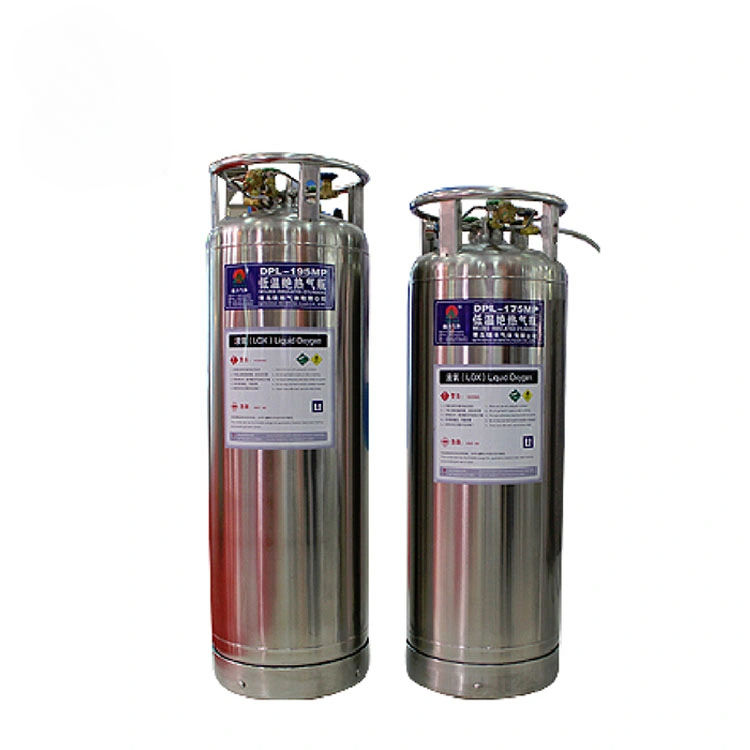
Here is a comparison table for key parameters to consider in harsh environments:
| Parameter | Standard Instrument | Ruggedized Solution | Why It Matters |
|---|---|---|---|
| Ingress Protection (IP) | IP65 | IP68 / IP69K | IP68 allows submersion; IP69K resists high-pressure washdowns. |
| Housing Material | Standard Stainless Steel | Hastelloy C-276 / Titanium | Superior resistance to pitting and crevice corrosion in chemical exposures. |
| Operating Temp. Range | -20°C to 70°C | -40°C to 120°C | Ensures functionality in freezer storage or near high-temperature reactors. |
| Certification | CE, RoHS | ATEX, IECEx, SIL 2/3 | Mandatory for use in potentially explosive atmospheres (ATEX zones). |
Scenario 2: The Precision Measurement Puzzle
In pharmaceutical manufacturing or food & beverage processing, a slight deviation in temperature, pressure, or flow can ruin an entire batch, leading to massive financial loss and compliance failures. The pain point is the high cost of inaccuracy. Using a general-purpose sensor for a critical control loop simply doesn't work.
The solution requires instruments with high accuracy, repeatability, and fast response times. Key specifications like total error band, long-term drift, and signal stability become paramount. Furthermore, instruments must be easy to calibrate and integrate with plant-wide control systems (e.g., PLCs, DCS). Raydafon Technology Group Co.,Limited addresses this by offering precision-grade sensors with detailed calibration certificates and comprehensive communication protocol options (4-20mA, HART, Foundation Fieldbus, PROFIBUS). Their technical support helps you choose the instrument that delivers the exact data fidelity your process demands.
Consider the following parameters for precision-critical applications:
| Parameter | General Purpose | High-Precision Grade | Impact on Process |
|---|---|---|---|
| Accuracy | ±1.0% Full Scale | ±0.1% or ±0.05% Full Scale | Directly affects product consistency and quality control. |
| Long-Term Drift | 0.5% per year | <0.1% per year | Reduces calibration frequency and maintenance costs. |
| Response Time (T63) | 500 ms | <100 ms | Critical for fast-acting control loops to prevent overshoot. |
| Output Signal & Protocol | 4-20mA | 4-20mA with HART, Digital (Modbus, PROFINET) | Digital protocols enable advanced diagnostics and easier integration. |
Frequently Asked Questions (FAQ)
Q: What is the first step in choosing the right electrical instrument for a specific industrial application?
A: The absolute first step is to thoroughly define the application requirements. This goes beyond just the measured variable (e.g., pressure, temperature). You must document the process media, operating temperature and pressure ranges, environmental conditions (hazardous area classification, humidity, vibration), required accuracy, output signal type, and necessary certifications. Creating a detailed specification sheet is crucial. Companies like Raydafon Technology Group Co.,Limited often provide checklists or consultation services to help procurement teams capture all these critical details, ensuring the selected instrument is a perfect fit from day one.
Q: How important are supplier reliability and after-sales support in the selection process?
A: Extremely important. The instrument is only one part of the solution. A reliable supplier provides technical expertise during selection, ensures timely delivery, and offers robust after-sales support including calibration services, spare parts availability, and troubleshooting assistance. Choosing a partner like Raydafon Technology Group Co.,Limited, with a proven track record and a commitment to customer service, mitigates risk. It ensures you have expert support throughout the instrument's lifecycle, protecting your investment and minimizing potential downtime.
Conclusion & Next Steps
Choosing the right electrical instrument is a strategic decision that impacts operational efficiency, safety, and profitability. By moving beyond basic specs and considering the full application scenario—environmental challenges, precision needs, and integration requirements—you can make a choice that delivers long-term value. Leveraging the knowledge of an experienced partner simplifies this complex process.
We encourage you to share your specific challenges or scenarios in the comments below. What's the toughest instrument selection problem you've faced in your facility?
For over a decade, Raydafon Technology Group Co.,Limited has been a trusted partner for industrial procurement professionals worldwide, specializing in high-performance electrical and instrumentation solutions. We bridge the gap between complex technical requirements and reliable, cost-effective products. Visit our website at https://www.raydafon-hydraulic.com to explore our comprehensive catalog, or contact our engineering sales team directly at [email protected] for personalized application support.
Smith, J., & Chen, L. (2022). Advancements in Corrosion-Resistant Sensor Materials for Chemical Industries. Journal of Process Instrumentation, 45(3).
Johnson, M. K. (2021). The Impact of Measurement Accuracy on Batch Process Yield in Pharmaceutical Manufacturing. IEEE Transactions on Industrial Electronics, 68(7).
Global Standards Committee. (2020). IEC 61511: Functional Safety - Safety Instrumented Systems for the Process Industry Sector. International Electrotechnical Commission.
Davis, R., et al. (2019). WirelessHART vs. Wired 4-20mA: A Lifecycle Cost Analysis for Plant-Wide Instrumentation. Industrial Engineering Journal, 52(4).
Petrov, A. (2018). Machine Learning for Predictive Maintenance of Industrial Pressure Transmitters. Sensors and Actuators A: Physical, 285.
Lee, S., & Wang, H. (2017). Design and Testing of an IP69K-Rated Enclosure for Food & Beverage Processing Equipment. Packaging Technology and Science, 30(9).
European Committee. (2016). ATEX Directive 2014/34/EU: Equipment and Protective Systems Intended for Use in Potentially Explosive Atmospheres. Official Journal of the European Union.
Brown, T., & Garcia, F. (2015). Calibration Intervals and Long-Term Stability of High-Accuracy Temperature Sensors. Measurement Science and Technology, 26(11).
Kawasaki, Y. (2014). Integration of Fieldbus Protocols with Modern Distributed Control Systems. Automation in Industry, 39(2).
Miller, P. D. (2013). Selecting Pressure Transducers for Hydraulic and Pneumatic Systems: A Practical Guide. Fluid Power Journal, 67(1).
Related News
- What size refrigeration equipment do I need for a restaurant?
- How do you find the mode of ungrouped data?
- Can a dirty air filter cause health problems?
- How do you regenerate adsorbent in an adsorption system?
- What safety features are built into cryogenic tank containers?
- How do you prevent microbial growth in water storage tanks?
Leave me a message