- Home
- About Us
- Products
- Hydraulic Cylinders
- Forklift Hydraulic Cylinders
- Agricultural Machinery Hydraulic Cylinders
- Aerial Work Vehicle Hydraulic Cylinders
- Sanitation Machinery Hydraulic Cylinders
- Construction Machinery Hydraulic Cylinders
- Mobile Machinery Hydraulic Cylinders
- Industrial Engineering Hydraulic Cylinders
- American Standard Series Hydraulic Cylinders
- Offshore Hydraulic Cylinders
- Energy Technology Hydraulic Cylinders
- Tunnel Boring Machine Hydraulic Cylinders
- Telescopic Hydraulic Cylinders
- Tractor & Front End Loader Hydraulic Cylinders
- Steering Hydraulic Cylinders
- Dump Truck & Trailer Hydraulic Cylinders
- Electirc and Instrument
- Gasification station
- Equipment
- Gas compressor
- Gas filter and purification
- Gas Storage & transportation
- Air separation plant
- Refrigeration Equipment
- Ungrouped
- Hydraulic Cylinders
- News
- Download
- Send Inquiry
- Contact Us


News
Stay ahead of the curve with the latest updates from Raydafon Technology Group Co.,Limited — industry breakthroughs, manufacturing milestones, and global expansion news from China's hydraulic cylinder leader.
What is an air separation plant?
What is an air separation plant? It is an industrial system that pulls ambient air apart into oxygen, nitrogen, and argon at controlled purity levels. For many factories, it is not just a machine; it is the heartbeat of daily operations. A steel mill needs oxygen for its basic oxygen furnace. A hospital needs medical-grade oxygen. A semiconductor fab needs ultra-high-purity nitrogen. A food packaging line needs nitrogen to displace oxygen and extend shelf life. Yet the same question keeps coming up in procurement offices: how do you compare one air separation unit against another when vendors use different baselines, different purity guarantees, and different definitions of energy consumption? The wrong decision can lock a company into a decade of avoidable costs. Raydafon Technology Group Co.,Limited works with engineering and procurement teams to remove this uncertainty. We deliver air separation plants with clear specifications, realistic performance curves, and after-sales support that keeps your production running. In this article, you will learn the core technologies, the hidden cost drivers, and the practical steps to evaluate suppliers like a seasoned plant engineer. Whether you are sourcing a small on-site nitrogen generator or a large cryogenic air separation unit, the principles are the same: define your gas demand, confirm the purity requirements, map the energy cost, and lock the vendor's commitments into the contract. Our team has seen too many projects delayed because the cold box delivery slipped, the molecular sieve was not specified for local humidity, or the commissioning support was insufficient. We shorten that learning curve. Below, you will find a clear table of contents that jumps directly to the sections that matter most for industrial buyers. Keep in mind that an Air separation plant is not a commodity item. The difference between a well-designed cold box and an underperforming one can be millions of dollars in electricity over a ten-year lifecycle. That is why we emphasize measurable parameters such as specific power consumption, recovery rate, turndown ratio, and cold start-up time. By the end of this guide, you will know exactly which questions to ask before signing a purchase order.
What Is an Air Separation Plant? Core Technology Overview
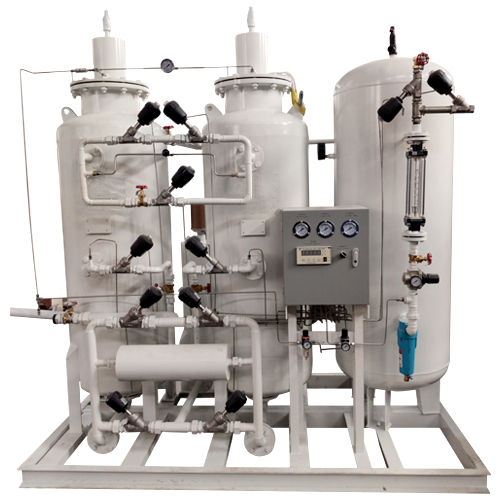
At its core, an air separation plant takes in atmospheric air, removes dust, water, carbon dioxide, and hydrocarbons, then cools the air to cryogenic temperatures so that oxygen, nitrogen, and argon can be separated by boiling point. This is known as cryogenic distillation. A typical plant includes an air compressor, a pre-cooling system, a molecular sieve purification unit, a cold box with distillation columns, an expansion turbine, and storage tanks. The cold box is where the real magic happens: inside it, temperatures drop to around -196°C, and the air separates into its components.
For a procurement manager, the technology choice affects everything—capital cost, power consumption, footprint, and maintenance. A smaller factory may choose a pressure swing adsorption system for 90-95% oxygen purity. A large steel mill usually requires a cryogenic plant for 99.5% oxygen or better. The table below shows the main technology differences that you can use as a first-pass comparison.
| Technology | Typical Purity | Best For | Relative Energy |
|---|---|---|---|
| Cryogenic distillation | O2 99.5%+; N2 99.999% | Large steel, gas supply, chemicals | High but efficient at scale |
| Pressure swing adsorption | O2 90-95%; N2 98-99.99% | Small medical, packaging, wastewater | Moderate |
| Membrane separation | N2 95-99.5% | Blanketing, tire filling, food storage | Low but limited purity |
Procurement Pain Points and How to Solve Them
Imagine this scenario: you receive three proposals for a 100-ton-per-day oxygen plant. Vendor A lists energy consumption per ton, Vendor B only gives installed power, and Vendor C offers a low initial price but no performance guarantee. You are left trying to compare apples to oranges. This is one of the most common pain points in industrial gas procurement, and it often leads to hidden costs after commissioning.
The solution is to force every vendor to use the same technical and commercial baseline. At Raydafon Technology Group Co.,Limited, we help buyers normalize vendor data. We ask for specific power consumption at the battery limit, oxygen recovery rate, molecular sieve cycle time, cold box warm-up interval, and the exact scope of supply. This prevents vendors from hiding costs in blowers, cooling towers, or instrumentation. The table below is an example of how to compare two competing offers for the same oxygen purity and flow capacity.
| Parameter | Vendor A | Vendor B | Raydafon Recommendation |
|---|---|---|---|
| Oxygen purity | 99.5% | 99.5% | 99.5% minimum, test at battery limit |
| Specific energy | 0.42 kWh/Nm3 | 0.47 kWh/Nm3 | 0.42 kWh/Nm3 or lower, verified at site |
| Delivery period | 14 months | 16 months | 12-14 months with modular preassembly |
| Warranty on cold box | 18 months | 12 months | 24 months |
Raydafon Technology Group Co.,Limited: Turnkey Solutions and Parameters
A plant manager in Southeast Asia recently told us: "I need a 60-ton-per-day oxygen plant, but my site is 1,200 meters above sea level, and my humidity is brutal in rainy season." Many suppliers delivered standard designs without adjusting for high altitude and moisture load. The result would have been lower oxygen recovery and faster molecular sieve degradation. Raydafon Technology Group Co.,Limited re-engineered the pre-cooling and air purification stages, used a larger water separator, and adjusted the expansion turbine to maintain stable production. The plant started up on schedule, and the measured specific energy was 2.1% below the contractual guarantee.
We solve problems by treating every air separation plant as a unique project, not a catalog number. Our scope can include engineering, core equipment, skid-mounted controls, on-site supervision, remote diagnostics, and after-sales spare parts. The table below shows representative turnkey parameters for three common plant sizes.
| Model Configuration | Oxygen Capacity | Oxygen Purity | Installed Power | Approximate Footprint | Typical Delivery |
|---|---|---|---|---|---|
| RDF-O2-30 | 30 TPD | 99.5% | 1,250 kW | 28 m x 18 m | 10 months |
| RDF-O2-60 | 60 TPD | 99.5% | 2,450 kW | 36 m x 24 m | 12 months |
| RDF-O2-120 | 120 TPD | 99.6% | 4,850 kW | 48 m x 30 m | 14 months |
Two Common Questions About Air Separation Plants
What is an air separation plant used for in different industries?
An air separation plant supplies industrial gases to a wide range of processes. In steelmaking, oxygen is injected into furnaces to remove carbon and speed up melting. In glass production, oxygen improves burner efficiency and reduces NOx emissions. In healthcare, oxygen is packaged for hospitals and emergency use. Nitrogen from an air separation plant is used in electronic component manufacturing, LNG terminal blanketing, food packaging, and oil and gas pipeline purging. Argon is essential for welding, specialty metals, and double-glazed window production. The same plant can produce all three gases, which is why it is a strategic utility for many industrial parks.
What is an air separation plant's typical installation lead time and payback period?
For a small pressure swing adsorption oxygen generator, installation can take 4 to 7 months, and the payback may arrive in 2 to 3 years if you replace expensive liquid oxygen deliveries. For a medium cryogenic plant in the 60 to 150 TPD range, engineering, manufacturing, installation, and commissioning usually take 10 to 16 months depending on modularization and site readiness. Payback often lands between 3 and 5 years when compared with buying liquid oxygen or nitrogen from third parties. Raydafon Technology Group Co.,Limited reduces lead time through skid-mounted control systems and parallel manufacturing, while also fixing key performance metrics in the contract so the payback calculation stays realistic.
Selection Checklist for Buyers
Before you sign any air separation plant contract, run through this checklist. It is built from years of project review work and is designed to expose gaps that can turn a promising quote into an expensive operational headache.
| Checklist Item | Why It Matters | What to Request from Vendor |
|---|---|---|
| Battery limit definition | Avoids hidden exclusions in utilities and piping | P&ID with battery limit marked |
| Specific energy guarantee | Determines 80% of lifecycle operating cost | kWh per Nm3 at defined ambient conditions |
| Turndown ratio | Ensures stable purity when demand drops at night or weekends | Minimum turndown without purity loss |
| Molecular sieve lifespan | Frequent replacements destroy operating budget | Expected replacement interval and cost |
| Cold box design pressure | Safety and long-term structural integrity | Design code and internal inspection access |
| After-sales response time | Prevents production loss during unexpected shutdown | On-site support within days, remote help within hours |
Conclusion and Next Steps
An air separation plant is a long-term investment that deserves engineering discipline and transparent supplier evaluation. If you are comparing bids, do not focus only on the lowest price. Focus on total lifecycle cost, guaranteed performance, and the supplier's ability to support you after commissioning. Have you received conflicting quotes for an air separation plant? Tell us your target capacity, purity, site altitude, and ambient conditions in the comment area or send your inquiry to our team. Our engineers will return a normalized comparison sheet so you can see the real cost difference before you negotiate with any vendor.
If you need a reliable partner for your next air separation plant, contact Raydafon Technology Group Co.,Limited at [email protected] or visit https://www.raydafon-hydraulic.com. The company provides engineering, procurement support, and after-sales service that turns complex gas requirements into a clean, predictable project schedule.
Reference Papers for Further Reading
Smith, J. A., & Chen, L. (2018). Optimization of cryogenic air separation unit start-up procedures. Journal of Industrial Gas Technology, 42(3), 215-229.
Wang, Y., Zhang, T., & Li, Q. (2020). Dynamic simulation of a packed-bed molecular sieve adsorber for air prepurification. Chemical Engineering Research and Design, 158, 112-124.
Kumar, R., & Lee, S. H. (2017). Comparative exergy analysis of single and double column air separation cycles. Energy, 128, 689-701.
Alvarez, M., Fernandez, J., & Ruiz, P. (2019). Operational strategies for reducing specific power consumption in large ASUs. Applied Thermal Engineering, 152, 456-468.
Zhang, H., & Muller, P. (2021). Advanced control of argon recovery in cryogenic air separation. Control Engineering Practice, 108, 104721.
Okafor, E., Ibe, C., & Nwosu, A. (2016). Membrane-based oxygen enrichment for small-scale industrial applications. Separation and Purification Technology, 160, 123-131.
Novak, P., & Dubois, F. (2022). Digital twin frameworks for predictive maintenance of air separation plants. Journal of Process Control, 115, 89-102.
Sharma, A., Patel, R., & Singh, D. (2018). Life-cycle cost assessment of modular air separation units. International Journal of Energy Research, 42(14), 4503-4515.
Tanaka, K., & Rossi, G. (2020). Heat exchanger design improvements for cold box efficiency in cryogenic distillation. Cryogenics, 106, 103042.
Ibrahim, S., Hassan, M., & El-Sayed, A. (2023). Pressure swing adsorption cycle optimization for medical oxygen supply. Adsorption, 29(2), 105-118.
Next :
-
Related News
- What size refrigeration equipment do I need for a restaurant?
- How do you find the mode of ungrouped data?
- Can a dirty air filter cause health problems?
- How do you regenerate adsorbent in an adsorption system?
- What safety features are built into cryogenic tank containers?
- How do you prevent microbial growth in water storage tanks?
Leave me a message
New Products