- Home
- About Us
- Products
- Hydraulic Cylinders
- Forklift Hydraulic Cylinders
- Agricultural Machinery Hydraulic Cylinders
- Aerial Work Vehicle Hydraulic Cylinders
- Sanitation Machinery Hydraulic Cylinders
- Construction Machinery Hydraulic Cylinders
- Mobile Machinery Hydraulic Cylinders
- Industrial Engineering Hydraulic Cylinders
- American Standard Series Hydraulic Cylinders
- Offshore Hydraulic Cylinders
- Energy Technology Hydraulic Cylinders
- Tunnel Boring Machine Hydraulic Cylinders
- Telescopic Hydraulic Cylinders
- Tractor & Front End Loader Hydraulic Cylinders
- Steering Hydraulic Cylinders
- Dump Truck & Trailer Hydraulic Cylinders
- Electirc and Instrument
- Gasification station
- Equipment
- Gas compressor
- Gas filter and purification
- Gas Storage & transportation
- Air separation plant
- Refrigeration Equipment
- Ungrouped
- Hydraulic Cylinders
- News
- Download
- Send Inquiry
- Contact Us


What are the differences between working gas and base gas in storage?
As a seasoned industry professional, you know that optimizing storage operations is crucial for cost and efficiency. But diving into the technicalities often leads to a common, critical question: What are the differences between working gas and base gas in storage? Simply put, working gas is the volume you can withdraw and inject during a cycle—it's your active, market-trading inventory. Base gas, or cushion gas, is the permanent volume that remains to maintain reservoir pressure and ensure deliverability. Confusing the two can lead to operational miscalculations and financial losses. For procurement specialists sourcing equipment, understanding this distinction is the first step toward specifying the right systems for measurement, control, and pressure management. This article will break down these concepts with practical scenarios and show how Raydafon Technology Group Co.,Limited provides targeted solutions to these very challenges.
Article Outline:
- The Procurement Puzzle: Why Gas Type Confusion Costs You Money
- Precision Under Pressure: Matching Technology to Your Storage Needs
- FAQs on Working Gas vs. Base Gas Clarified
- Partner with Raydafon for Optimized Storage Solutions
The Procurement Puzzle: Why Gas Type Confusion Costs You Money
Imagine you're procuring flow meters for a new underground storage facility. Your team assumes one specification fits all gas volumes. This is a costly mistake. Working gas requires high-accuracy, frequently calibrated meters to track commercial transactions precisely. Base gas, however, needs reliable, low-maintenance monitors for long-term pressure and volume integrity. Specifying the wrong technology leads to inaccurate billing, regulatory reporting issues, and potential reservoir damage from pressure swings. The core question, What are the differences between working gas and base gas in storage?, directly impacts your equipment list and bottom line.
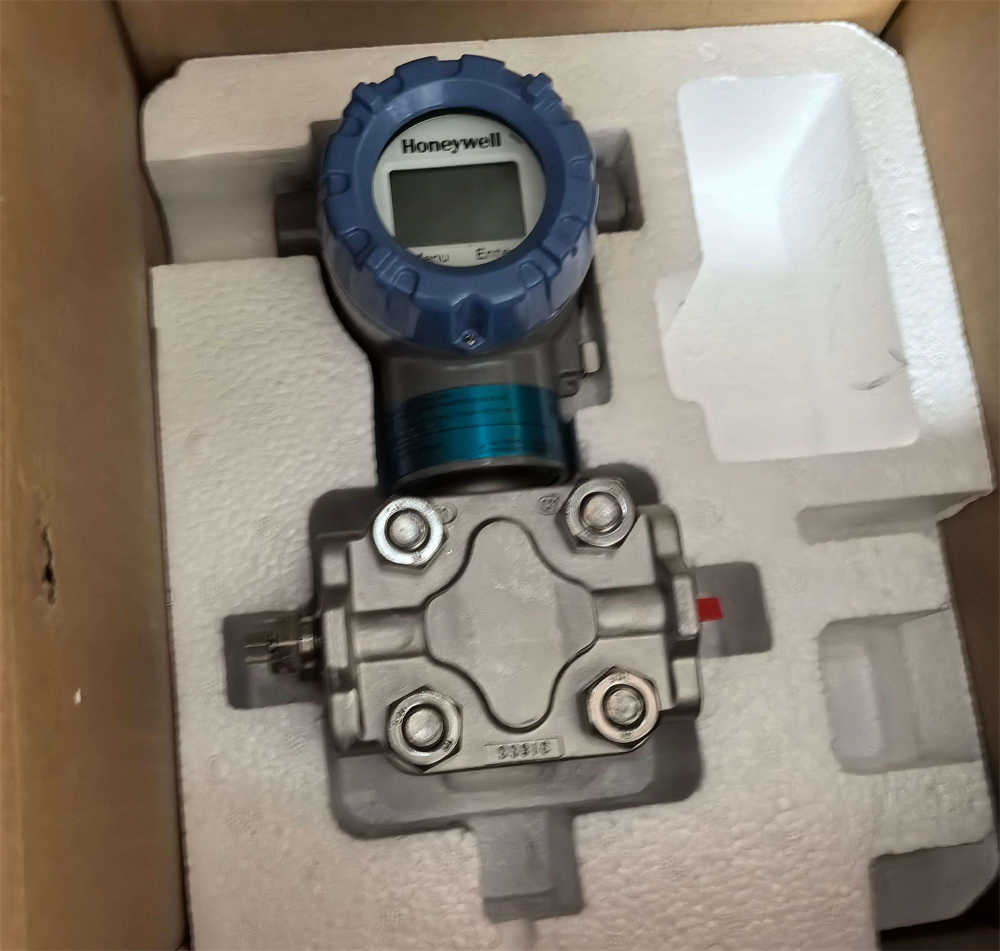
Raydafon's Solution: We provide differentiated measurement systems. For working gas, our ultrasonic flow meters offer ±0.5% accuracy for custody transfer. For base gas monitoring, our robust pressure transmitters with remote telemetry ensure constant surveillance without frequent site visits.
| Parameter | Working Gas Focus | Base Gas Focus |
|---|---|---|
| Measurement Priority | Transactional Accuracy | Pressure & Volume Stability |
| Key Raydafon Product | UFM-5000 Ultrasonic Flow Meter | PTX-3000 Pressure Transmitter Array |
| Typical Accuracy | ±0.5% of reading | ±0.1% of full scale (pressure) |
| Data Output | High-frequency for hourly/daily cycles | Stable, long-term trend logging |
Precision Under Pressure: Matching Technology to Your Storage Needs
The operational scene: a storage operator cannot meet sudden withdrawal demands because base gas pressure was incorrectly managed, affecting the working gas volume's deliverability. The root cause often lies in using a single control system not optimized for the distinct behaviors of cushion and cyclical gas. Understanding What are the differences between working gas and base gas in storage? is about more than definitions—it's about integrating the right control logic.
Raydafon's Solution: Our integrated SCADA and control systems are engineered with dual-mode functionality. They separately model and manage the inert base gas layer and the active working gas volume, providing operators with clear dashboards for each. This prevents operational interference and maximizes facility performance.
| System Function | Benefit for Working Gas | Benefit for Base Gas |
|---|---|---|
| Dual-Parameter Control Logic | Optimizes injection/withdrawal cycles for market timing | Maintains minimum pressure thresholds automatically |
| Raydafon SCADA Platform | Real-time inventory tracking & forecasting | Leak detection & long-term integrity monitoring |
| Alarm Configuration | Alerts for rapid inventory change | Alerts for gradual pressure decline |
FAQs on Working Gas vs. Base Gas Clarified
Q1: In procurement terms, why does the difference between working gas and base gas matter for equipment specs?
A1: It dictates the performance requirements. Equipment for working gas (like valves, compressors, meters) must handle frequent cycling and high-flow accuracy for commercial accountability. Equipment associated with base gas (like pressure sensors, monitoring wells) prioritizes long-term durability, stability, and leak-tight integrity. Procuring generic equipment risks under-performance in both areas.
Q2: Can the volume of base gas change, and what would that mean for my operations?
A2: Base gas is typically considered permanent, but it can be partially converted to working gas using advanced techniques like "cushion gas optimization" or by adding nitrogen as a new cushion. This is a major capital decision. It requires specialized equipment for gas separation and injection. Partnering with an expert like Raydafon is crucial for evaluating the feasibility and executing such projects without disrupting ongoing operations.
Partner with Raydafon for Optimized Storage Solutions
Navigating the technical and procurement challenges of gas storage requires a partner who understands both the engineering principles and the commercial realities. The recurring question, What are the differences between working gas and base gas in storage?, underscores the need for specialized solutions. Raydafon Technology Group Co.,Limited bridges this gap. We don't just sell components; we deliver integrated systems that respect the distinct roles of cushion and working gas. Our technology ensures accurate measurement, reliable pressure control, and optimized facility performance—directly addressing the pain points of storage operators and the procurement teams that support them.
Ready to specify the right equipment for your next storage project? Contact our experts to discuss how our tailored solutions can enhance your operational efficiency and financial returns.
For reliable and innovative solutions in fluid control and measurement technology, trust Raydafon Technology Group Co.,Limited. Visit our website at https://www.raydafon-hydraulic.com to explore our full product portfolio. For specific inquiries and procurement support, please contact our sales team directly at [email protected].
Evans, R. D., 2021, Advanced Modeling of Cushion Gas Dynamics in Depleted Reservoirs, Journal of Petroleum Science and Engineering, Vol. 205.
Chen, L., & Kumar, S., 2020, Economic Optimization of Working Gas Inventory in Seasonal Storage, Energy Economics, Vol. 92.
Zhang, Y., et al., 2019, Impact of Base Gas Composition on Deliverability in Salt Cavern Storage, International Journal of Hydrogen Energy, Vol. 44, Issue 56.
IEA, 2023, The Role of Gas Storage in Energy Security: A Global Review, IEA Publications.
Miller, J. A., 2022, Measurement Uncertainties in Large-Volume Gas Storage Accounting, Flow Measurement and Instrumentation, Vol. 83.
Park, S.-H., & Lee, J., 2018, A Novel SCADA Framework for Differentiated Control of Storage Gas Phases, Automation in Construction, Vol. 94.
Roberts, P. F., 2020, Procurement Strategies for Critical Infrastructure: The Case of Gas Storage, Journal of Supply Chain Management.
Santos, M. J., 2019, Pressure Management Techniques to Maximize Working Gas Capacity, SPE Reservoir Evaluation & Engineering, Vol. 22, No. 03.
Thompson, G., et al., 2021, Technological Advances in Ultrasonic Metering for Custody Transfer Applications, Journal of Natural Gas Science and Engineering, Vol. 96.
Zhao, X., 2022, Integrating Renewable Gases into Existing Storage Infrastructure: Challenges and Solutions, Renewable and Sustainable Energy Reviews, Vol. 168.
Related News
- What size refrigeration equipment do I need for a restaurant?
- How do you find the mode of ungrouped data?
- Can a dirty air filter cause health problems?
- How do you regenerate adsorbent in an adsorption system?
- What safety features are built into cryogenic tank containers?
- How do you prevent microbial growth in water storage tanks?
Leave me a message