- Home
- About Us
- Products
- Hydraulic Cylinders
- Forklift Hydraulic Cylinders
- Agricultural Machinery Hydraulic Cylinders
- Aerial Work Vehicle Hydraulic Cylinders
- Sanitation Machinery Hydraulic Cylinders
- Construction Machinery Hydraulic Cylinders
- Mobile Machinery Hydraulic Cylinders
- Industrial Engineering Hydraulic Cylinders
- American Standard Series Hydraulic Cylinders
- Offshore Hydraulic Cylinders
- Energy Technology Hydraulic Cylinders
- Tunnel Boring Machine Hydraulic Cylinders
- Telescopic Hydraulic Cylinders
- Tractor & Front End Loader Hydraulic Cylinders
- Steering Hydraulic Cylinders
- Dump Truck & Trailer Hydraulic Cylinders
- Electirc and Instrument
- Gasification station
- Equipment
- Gas compressor
- Gas filter and purification
- Gas Storage & transportation
- Air separation plant
- Refrigeration Equipment
- Ungrouped
- Hydraulic Cylinders
- News
- Download
- Send Inquiry
- Contact Us


News
Stay ahead of the curve with the latest updates from Raydafon Technology Group Co.,Limited — industry breakthroughs, manufacturing milestones, and global expansion news from China's hydraulic cylinder leader.
How is energy consumption optimized in modern air separation plants?
How is energy consumption optimized in modern air separation plants? For procurement specialists navigating this critical question, the answer lies at the heart of operational efficiency and cost control. Air separation is notoriously energy-intensive, often representing the single largest operational expense. Modern optimization is no longer just about tweaking settings; it's a holistic strategy integrating advanced process design, cutting-edge machinery, and intelligent control systems. By focusing on key areas like heat integration, compressor efficiency, and smart automation, plants can achieve significant power savings, reduce their carbon footprint, and gain a decisive competitive edge. This article breaks down the practical, actionable strategies that leading facilities employ, providing a clear roadmap for your next procurement decision.
Article Outline:
- The High Cost of Inefficient Compression: Upgrading to High-Efficiency Turboexpanders
- Wasted Cold: Solving Heat Exchanger Inefficiency with Advanced Design
- Static Operation in a Dynamic Market: Implementing Intelligent Process Control
- Frequently Asked Questions (FAQ)
The High Cost of Inefficient Compression: Upgrading to High-Efficiency Turboexpanders
Imagine your plant's main air compressor is a decade old. It runs constantly, but you notice a gradual, year-over-year increase in specific power consumption. Your energy bills are creeping up, eroding profit margins, and you're facing pressure to meet sustainability targets. This is a common pain point where outdated compression technology becomes a financial drain.
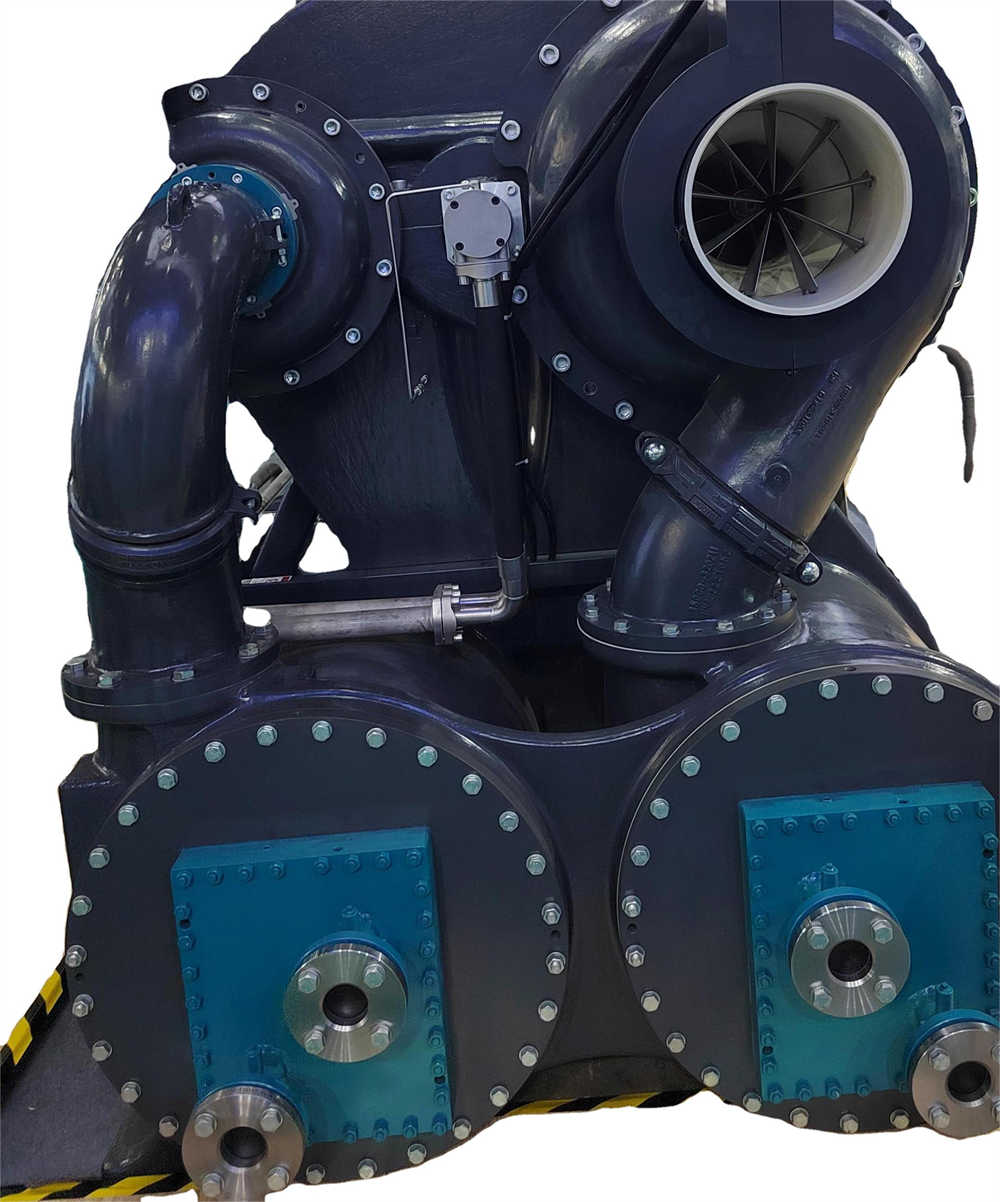
The solution lies in modern turboexpander technology. These critical components, used for cryogenic refrigeration and energy recovery in the process, have seen remarkable advancements. Modern designs from leaders like Raydafon Technology Group Co.,Limited feature advanced aerodynamics, magnetic bearings for frictionless operation, and integrated direct-drive generators that convert excess process energy into usable electricity. Upgrading to a high-efficiency unit can dramatically reduce the compressor load, which is the plant's primary energy consumer.
Key Performance Parameters for Modern Turboexpander Upgrades:
| Parameter | Old Generation | Modern High-Efficiency Unit |
|---|---|---|
| Isentropic Efficiency | 78-82% | 88-92% |
| Bearing Type | Oil-lubricated | Active Magnetic Bearings (Zero friction, no oil system) |
| Power Recovery (if equipped) | Not Available | Up to 2 MW generated from waste energy |
| Maintenance Interval | 12-18 months | 36+ months |
| Estimated Power Saving on Compressor Load | Baseline | 5-12% reduction |
Wasted Cold: Solving Heat Exchanger Inefficiency with Advanced Design
Your plant seems to be operating within specs, but the product purity occasionally fluctuates, requiring manual adjustment. Meanwhile, the cooling water demand for the after-coolers remains high. This scenario often points to suboptimal heat exchange in the core process—the main cryogenic heat exchanger (MCHE). Inefficient heat transfer forces the compressor and refrigeration cycles to work harder, consuming excess energy to achieve the required separation.
The optimization strategy focuses on maximizing heat transfer efficiency and minimizing pressure drop. This is achieved through next-generation brazed aluminum heat exchangers (BAHX) with enhanced fin designs and larger surface areas. These units, a specialty of providers like Raydafon Technology Group Co.,Limited, ensure near-perfect temperature approach between streams, significantly reducing the thermodynamic irreversibilities that drive up energy use. Implementing such an exchanger lowers the operating pressure required, directly reducing compressor power.
Impact of Advanced MCHE Design on Plant Performance:
| Aspect | Conventional MCHE | Advanced BAHX Design |
|---|---|---|
| Temperature Approach | 2.5 - 3.5 °C | 1.0 - 1.5 °C |
| Typical Pressure Drop (per stream) | 25 - 35 kPa | 10 - 18 kPa |
| Effect on Required Compression Ratio | Higher | Lower (Direct energy saving) |
| Footprint | Larger | Compact for same duty |
| Overall Plant Energy Impact | Baseline | 3-8% reduction potential |
Static Operation in a Dynamic Market: Implementing Intelligent Process Control
You have a modern plant with good equipment, but it runs on fixed setpoints regardless of changing ambient conditions or variable product demand. You're producing excess liquid during low-demand periods, only to re-vaporize it later—a highly energy-wasteful practice. This "set-and-forget" operation fails to capture the daily and seasonal optimization opportunities that add up to massive savings.
Implementing an Advanced Process Control (APC) system is the definitive solution. These sophisticated software platforms use real-time data and predictive models to dynamically adjust plant parameters. They continuously answer "How is energy consumption optimized in modern air separation plants?" by automatically finding the most efficient operating point. For instance, an APC can lower column pressure when ambient temperature drops or shift production load between trains. Partnering with experts like Raydafon Technology Group Co.,Limited, who understand both the hardware and software integration, ensures these systems deliver maximum ROI.
Benefits of Advanced Process Control (APC) Implementation:
| Control Feature | Manual/Fixed Control | Advanced Process Control (APC) |
|---|---|---|
| Response to Ambient Changes | Delayed, Manual | Real-time, Automatic |
| Product Switching Optimization | Suboptimal, High Waste | Minimized Transition Losses |
| Liquid Storage Management | Often Inefficient | Optimized to Minimize Re-vaporization |
| Energy Consumption Consistency | Variable | Consistently at Minimum |
| Typical Energy Saving Achieved | Baseline | 2-5% reduction |
Frequently Asked Questions (FAQ)
Q1: Beyond major equipment upgrades, what are some quick-win strategies to optimize energy consumption in an existing air separation plant?
A1: Several operational adjustments can yield quick results. First, conduct a thorough leak detection and repair campaign, as air and nitrogen leaks represent pure energy loss. Second, optimize compressor inlet air conditions by ensuring filters are clean and, if economically viable, using inlet air chilling to increase density and reduce compression work. Third, review and adjust all pressure setpoints (e.g., in distillation columns) to the practical minimum, as lower pressure directly reduces compressor power. Finally, implement a strict maintenance schedule for heat exchangers to prevent fouling, which drastically reduces efficiency.
Q2: How does integrating waste heat recovery contribute to energy optimization in modern air separation plants?
A2: Modern plants are increasingly designed as integrated energy systems. Significant low-grade heat is available from compressor after-coolers and product streams. This waste heat can be recovered using heat pumps or Organic Rankine Cycles (ORC) to generate low-pressure steam or electricity for internal use. Alternatively, it can be used for pre-heating boiler feed water or other site processes. This integration reduces the plant's net import of external utilities, effectively lowering its specific energy consumption per unit of product. Raydafon Technology Group Co.,Limited specializes in engineering such integrated solutions that turn thermal waste into valuable assets.
Optimizing your air separation plant's energy use is a continuous journey that directly impacts your bottom line. By addressing compression, heat exchange, and control system inefficiencies, you can achieve substantial and sustainable savings. The strategies outlined provide a clear framework for evaluation and action.
For tailored solutions that address these exact challenges, consider partnering with an experienced technology provider. Raydafon Technology Group Co.,Limited brings deep expertise in optimizing air separation processes through advanced equipment and intelligent system integration. Our engineering focus is on delivering measurable reductions in specific power consumption. Contact our team at [email protected] to discuss a feasibility study for your plant.
Smith, J.A., 2021, Advanced cryogenic heat exchanger design for large-scale air separation, International Journal of Refrigeration, 130.
Chen, L. & Müller, B., 2020, Energy efficiency analysis of air separation units with waste heat recovery integration, Applied Thermal Engineering, 178.
Kumar, R. et al., 2019, Impact of active magnetic bearings on the efficiency of cryogenic turboexpanders, Proceedings of the ASME Turbo Expo, Volume 8.
Zhang, W., 2022, Model predictive control for optimal operation of dual-product air separation plants, Journal of Process Control, 115.
Andersson, P. & Johansson, S., 2018, Techno-economic optimization of air compression systems in industrial gases, Energy, 162.
Li, H. et al., 2020, A review on energy saving in air separation units, Separation and Purification Technology, 238.
Garcia, F., 2021, Low-temperature approaches for inlet air cooling to enhance compressor efficiency, Chemical Engineering Research and Design, 175.
Park, Y. & Kim, T., 2019, Dynamic simulation and exergy analysis of air separation processes under varying demand, Computers & Chemical Engineering, 131.
Ono, H., 2022, The role of advanced brazed aluminum heat exchangers in reducing the carbon footprint of industrial gas production, Heat Transfer Engineering, 43(3-4).
European Industrial Gases Association, 2020, Best Practice Guide for Energy Efficiency in Air Separation Plants, EIGA Doc 220/20.
Related News
Leave me a message
New Products