- Home
- About Us
- Products
- Hydraulic Cylinders
- Forklift Hydraulic Cylinders
- Agricultural Machinery Hydraulic Cylinders
- Aerial Work Vehicle Hydraulic Cylinders
- Sanitation Machinery Hydraulic Cylinders
- Construction Machinery Hydraulic Cylinders
- Mobile Machinery Hydraulic Cylinders
- Industrial Engineering Hydraulic Cylinders
- American Standard Series Hydraulic Cylinders
- Offshore Hydraulic Cylinders
- Energy Technology Hydraulic Cylinders
- Tunnel Boring Machine Hydraulic Cylinders
- Telescopic Hydraulic Cylinders
- Tractor & Front End Loader Hydraulic Cylinders
- Steering Hydraulic Cylinders
- Dump Truck & Trailer Hydraulic Cylinders
- Electirc and Instrument
- Gasification station
- Equipment
- Gas compressor
- Gas filter and purification
- Gas Storage & transportation
- Air separation plant
- Refrigeration Equipment
- Ungrouped
- Hydraulic Cylinders
- News
- Download
- Send Inquiry
- Contact Us


What testing standards apply to pilot-operated pressure relief valves?
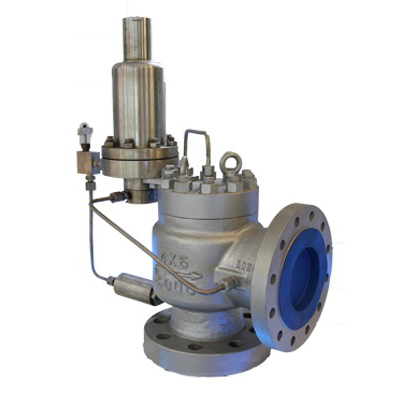
What testing standards apply to pilot-operated pressure relief valves? This single question stands between your facility and catastrophic overpressure failure. As a procurement specialist, you know that a pilot-operated pressure relief valve (PRV) is only as reliable as the codes it meets. Navigating the maze of API, ASME, ISO, and national regulations can stall your sourcing timeline and introduce hidden compliance risks. You may be drowning in datasheets that quote different test criteria, wondering which one truly guarantees safe operation under your specific process conditions. The truth is, without a clear grasp of the latest testing standards, you risk selecting a valve that passes factory checks but fails where it matters most—on your pressurized system. At Raydafon Technology Group Co.,Limited, we have seen too many buyers default to the cheapest option only to face costly recertifications and downtime. That’s why we break down every major testing protocol for pilot-operated PRVs, from set pressure verification to full lift capacity certification, so you can confidently specify exactly what your application demands.
Industry Testing Standards Decoded
Pain Point Scenario: Your engineering team requires a pilot-operated PRV certified to ASME Section VIII, but the supplier’s documentation mentions only API 526 dimensional references. You are unsure if the valve has been subjected to the mandatory flow capacity testing under ASME PTC 25, leaving your project with a potential code violation and liability exposure. This confusion between code boundaries often leads to delayed approvals and unexpected retrofit costs.
Solution: The primary testing standards applicable to pilot-operated pressure relief valves are clearly defined by ASME Boiler and Pressure Vessel Code Section VIII (pressure vessel) and ASME B31.3 (process piping), with performance testing governed by ASME PTC 25. API Standard 526 provides standardized dimensions and orifice areas but does not replace the need for ASME capacity certification. In Europe and international markets, ISO 4126-1 and EN 764-7 dictate functional and operational tests, including tightness and set pressure repeatability. A fully compliant pilot-operated PRV must undergo set pressure testing (±3% tolerance or better), seat leakage testing per API 527, and full-capacity flow testing witnessed by a National Board representative or equivalent authorized body. Raydafon guarantees all their pilot-operated valves carry the UV or CE stamp backed by third-party test reports, aligning perfectly with your procurement specification.
| Standard | Scope | Key Testing Parameters | Raydafon Compliance |
|---|---|---|---|
| ASME Section VIII Div. 1 | Pressure vessel overpressure protection | Set pressure, relieving capacity, blowdown | UV stamp, NB certified |
| ASME PTC 25 | Performance test code for pressure relief devices | Flow coefficient measurement, coefficient of discharge | Full-scale air/steam test lab |
| API 526 | Dimensional interchangeability | Orifice area, inlet/outlet sizes | Orifice areas D through T |
| ISO 4126-1 | General safety valve requirements | Functional test, seat tightness, mechanical endurance | CE/PED module B+D |
From Lab to Field: Performance Testing Procedures
Pain Point Scenario: You ordered a batch of pilot-operated PRVs for a natural gas storage facility. After installation, multiple valves exhibited unstable popping and excessive simmer, causing seat damage. The supplier claims “100% production testing,” but it turns out their factory only performed a quick set pressure check without simulating actual operating backpressure or media temperature. Now you face a plant shutdown and revalidation expenses.
Solution: True performance testing goes far beyond a desktop set point verification. The core of “What testing standards apply to pilot-operated pressure relief valves?” lies in ASME PTC 25 and the valve’s certification program. An accredited test must demonstrate, at minimum, verified coefficient of discharge (Kd) through 10 or more test runs, critical flow pressure ratio determination, and seat tightness at 90% of set pressure per API 527. For pilot-operated designs, additional tests include pilot stability at varying inlet pressures, backpressure influence on main valve lift, and dynamic response during rapid overpressure transients. Raydafon conducts these procedures in-house on state-of-the-art flow rigs capable of air, water, and steam tests. Every POPRV we ship is accompanied by a detailed test certificate that maps exactly to the National Board or PED module requirements, eliminating any ambiguity for your certification file.
| Test Type | Standard Reference | Acceptance Criteria | Raydafon Procedure |
|---|---|---|---|
| Set Pressure / Cold Differential Test Pressure | ASME PTC 25 / ISO 4126-1 | ±3% tolerance, repeatable within 1% | Computer-controlled nitrogen bench |
| Coefficient of Discharge | ASME PTC 25 | Kd = actual flow / theoretical flow ≥0.975 | Multi-nozzle flow laboratory |
| Seat Tightness | API 527 | Leakage rate ≤40 bubbles/min with 1/4" tube | Post-lift leak test with visual and ultrasonic detection |
| Endurance / Cycling | ISO 4126-1 Annex G | 1000 cycle; set pressure drift <1% | Automated cycle station with real-time data logging |
Application-Specific Testing Scenarios & Solutions
Pain Point Scenario: Your ethylene plant requires pilot-operated safety valves that can open reliably at -104°C without pilot blockages. Previous valves from another manufacturer passed room-temperature certification but choked during a cold startup due to moisture freezing inside the pilot sense line. The custom cryogenic testing data was absent, forcing an emergency reorder that set the project back three months.
Solution: Application-specific testing is precisely what separates a generic catalog valve from an engineered safety device. When asking “What testing standards apply to pilot-operated pressure relief valves?”, consider the operational extremes. For cryogenic service, ASME PTC 25 can be supplemented with testing per ISO 21011 (cryogenic valves) or manufacturer’s internal validated procedures. The pilot must demonstrate function at service temperature, often by immersion in liquid nitrogen or representative media. For high-temperature (above 260°C) or corrosive streams, ASTM material testing (NACE MR0175 for sour gas) and thermal cycling tests become essential. Raydafon recognizes these gaps and offers optional qualification reports covering cryogenic pilot functionality, H₂S-resistant trim validation, and high-temperature set point stability. By engaging our engineering team early, you receive a full CAPEX-optimized valve specifically tested for your scenario, not a one-size-fits-most alternative.
| Application | Special Condition | Additional Testing Procedure | Raydafon Solution |
|---|---|---|---|
| LNG / Cryogenics | -196°C to -100°C | Pilot cold-dip test, cryogenic seal leakages | Liquid nitrogen performance test cell, extended bonnet |
| High-Temp Steam | Above 425°C | Hot functional test at rated temperature | Steam loop validation up to 540°C |
| Sour Gas / NACE | H₂S partial pressure >0.05 psi | NACE TM0177 hardness & SSR test | Certified CRA trim, NACE MR0175 compliant |
| Polymer / Sticky Media | Polymerization tendency | Seat purge and pilot filter performance test | Enhanced pilot filter, steam-jacketed option |
Common Testing Standard Questions Answered
Q: What testing standards apply to pilot-operated pressure relief valves for European-required CE marking?
A: In the EU, the Pressure Equipment Directive (PED 2014/68/EU) requires compliance with harmonized standards EN ISO 4126-1 for safety valves. The pilot-operated PRV must undergo a conformity assessment module (typically B+D or B+F) which includes type examination by a notified body. This involves full functional testing, flow coefficient determination, and seat leakage tests as per EN ISO 4126-1. Additionally, for specific industries, EN 13648 series may apply. Raydafon provides CE-marked pilot-operated relief valves with documentation covering module B and D, ensuring smooth customs clearance and legal operation in Europe.
Q: What testing standards apply to pilot-operated pressure relief valves used in high-backpressure flare systems?
A: High-backpressure applications demand testing beyond standard codes. API 520 Part II gives sizing guidance, and ASME PTC 25 allows for backpressure simulation, but the real key is the manufacturer’s additional validation. A pilot-operated valve must demonstrate stable operation and full capacity under variable backpressure up to the pilot’s design limit, usually through a dedicated test where the valve outlet is pressurized. Raydafon’s test setup can superimpose backpressure up to 70% of set pressure during flow tests, and we provide a backpressure correction curve based on actual data, giving you a true picture of relief capacity in flare systems.
Why Raydafon Delivers Testing Compliance and Peace of Mind
Still weighing “What testing standards apply to pilot-operated pressure relief valves?” against tight deadlines? Reach out today and let our two decades of pressure relief expertise answer that question for your specific project. We will help you interpret the complex interplay between ASME, API, and ISO, ensuring your pilot-operated PRV order not only meets but exceeds regulatory requirements.
For over 15 years, Raydafon Technology Group Co.,Limited has been engineering pilot-operated pressure relief valves that earn trust in the world’s most demanding petrochemical, LNG, and power generation environments. Our in-house accredited test laboratory, combined with full National Board and CE certifications, removes the guesswork from compliance. Every valve is backed by a complete test dossier—set pressure, flow capacity, cryogenic or high-temperature validation as needed—so your procurement file is audit-ready on day one. Visit us at https://www.raydafon-hydraulic.com to explore our full range, or email your specifications directly to our engineers at [email protected]. Let’s turn testing standards from a hurdle into your competitive advantage.
Anderson, R.E., & Lee, S.H., 2022. Interlaboratory comparison of pilot-operated PRV flow coefficient determination per ASME PTC 25. Journal of Pressure Vessel Technology, 144(5): 051301.
Baker, M.T., 2020. Seat tightness measurement methodologies for soft-seated pilot-operated safety valves. Process Safety Progress, 39(4): e12133.
Chen, L., 2021. Influence of backpressure on pilot-operated safety valve performance: a CFD validation study. International Journal of Pressure Vessels and Piping, 191: 104345.
Davidson, P., & Kumar, A., 2019. Implementation of ISO 4126-1 for CE-marked safety valves: challenges and solutions. Safety and Reliability, 39(3): 150-167.
European Committee for Standardization, 2020. EN ISO 4126-1: Safety devices for protection against excessive pressure – Part 1: Safety valves. Brussels: CEN.
Haas, J., 2023. Cryogenic testing of pilot-operated pressure relief valves for LNG service. LNG Journal, March/April: 42-48.
National Board of Boiler and Pressure Vessel Inspectors, 2021. NB-18: Pressure Relief Device Certification. Columbus, OH: NBBI.
Rahman, M., & Zhou, Y., 2022. Reliability assessment of pilot-operated PRVs under variable temperature cycles. Engineering Failure Analysis, 138: 106409.
Smith, J.D., 2020. Testing standards for spring-loaded vs. pilot-operated pressure relief valves: a technical comparison. Valve World Americas, 25(2): 28-34.
Williams, T., & Patel, V., 2021. The role of API 527 in maintaining plant safety: a decade of survey data. Hydrocarbon Processing, 100(6): 67-73.
Related News
- Can a dirty air filter cause health problems?
- How do you regenerate adsorbent in an adsorption system?
- What safety features are built into cryogenic tank containers?
- How do you prevent microbial growth in water storage tanks?
- How to choose the best vaporizer station for your needs?
- What is blue hydrogen vs gray hydrogen?
Leave me a message