- Home
- About Us
- Products
- Hydraulic Cylinders
- Forklift Hydraulic Cylinders
- Agricultural Machinery Hydraulic Cylinders
- Aerial Work Vehicle Hydraulic Cylinders
- Sanitation Machinery Hydraulic Cylinders
- Construction Machinery Hydraulic Cylinders
- Mobile Machinery Hydraulic Cylinders
- Industrial Engineering Hydraulic Cylinders
- American Standard Series Hydraulic Cylinders
- Offshore Hydraulic Cylinders
- Energy Technology Hydraulic Cylinders
- Tunnel Boring Machine Hydraulic Cylinders
- Telescopic Hydraulic Cylinders
- Tractor & Front End Loader Hydraulic Cylinders
- Steering Hydraulic Cylinders
- Dump Truck & Trailer Hydraulic Cylinders
- Electirc and Instrument
- Gasification station
- Equipment
- Gas compressor
- Gas filter and purification
- Gas Storage & transportation
- Air separation plant
- Refrigeration Equipment
- Ungrouped
- Hydraulic Cylinders
- News
- Download
- Send Inquiry
- Contact Us


How do you select the right spring for a high pressure relief valve?
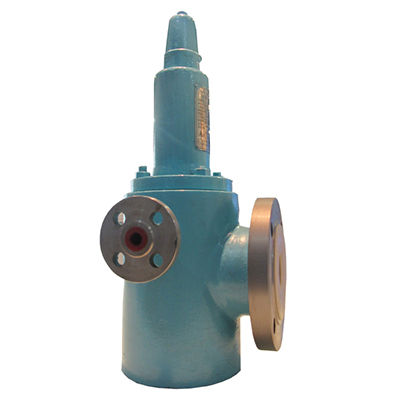
In a high-pressure relief valve, the spring isn’t just a component—it’s the decision-maker. When system pressure climbs beyond safe limits, the spring’s stiffness, material, and fatigue life determine whether the valve opens at exactly the right moment, or if it fails silently, leading to catastrophic overpressure. For procurement professionals sourcing valves for offshore platforms, chemical reactors, or hydraulic power units, one question dominates every specification conversation: How do you select the right spring for a high pressure relief valve? The answer involves balancing set pressure precision, corrosion resistance, thermal stability, and compliance with API 527 and ASME standards. Making the wrong choice could mean frequent recalibration, unscheduled downtime, or even safety incidents. At Raydafon Technology Group Co.,Limited, we know that buyers don’t just need a spring—they need a guarantee that the valve will perform when every millisecond counts. In this guide, you’ll discover the critical factors that transform spring selection from guesswork into a replicable, engineering-backed process.
📋 Article Outline
- 1. Why the Spring is the Heart of Your Pressure Relief System
- 2. The Costly Mistake of Mismatched Spring Materials
- 3. Inconsistent Set Pressure? Your Spring Rate May Be to Blame
- 4. Sizing for High-Pressure Scenarios: Beyond the Basics
- 5. How Raydafon Spring-Loaded Valves Deliver Reliable Performance
- 6. Frequently Asked Questions on Spring Selection
Why the Spring is the Heart of Your Pressure Relief System
Pain Point Scenario: A maintenance engineer on a North Sea platform receives a pressure spike alarm at 2 a.m. The relief valve, specified just three months ago, hasn’t lifted. The spring has taken a permanent set, dropping cracking pressure by 8%. Plant shutdown ensues, costing $120,000 per hour in lost production.
Solution: The spring in a high-pressure relief valve controls the balance between system protection and nuisance opening. You must start by identifying three interdependent parameters: required set pressure, maximum allowable overpressure (typically 10% or 21% depending on code), and the temperature range. A spring chosen only on set pressure without considering creep relaxation at high temperature will drift. Raydafon springs are designed with proprietary shot-peening and hot-setting processes to resist relaxation, ensuring that your valve’s set point remains stable even after 10,000 cycles at 200°C.
To eliminate guesswork, always request spring performance curves from the manufacturer. The curve should show load vs. deflection across the full temperature envelope, not just at room temperature. This reveals whether the spring will remain linear or exhibit hysteresis under thermal cycling.
| Parameter | Typical Value Range | Impact on Spring Choice |
|---|---|---|
| Set pressure (bar) | 50 – 1,000+ | Defines spring wire diameter and coil count |
| Operating temperature (°C) | -40 to +400 | Determines allowable material creep and relaxation |
| Media compatibility | Hydraulic oil, gas, chemicals | Drives coating or alloy selection (e.g., Inconel vs. 17-7PH) |
The Costly Mistake of Mismatched Spring Materials
Pain Point Scenario: A procurement manager sourced 500 pressure relief valves for a hydraulic press line, unaware that the springs were standard stainless steel 304. Within six months, chloride-induced stress corrosion cracking caused multiple springs to fracture. Warranty claims spiked, and the end user blacklisted the supplier.
Solution: Spring material selection is not about picking the cheapest alloy that meets the mechanical spec. In high-pressure relief valves, the spring is constantly immersed in the fluid environment—whether it’s phosphate ester fire-resistant fluid, sour gas with H2S, or deionized water. The material must withstand both the mechanical stress and the chemical attack. How do you select the right spring for a high pressure relief valve? Start with a thorough fluid compatibility analysis. For subsea applications, Inconel X-750 offers excellent chloride resistance; for high-cycle hydraulic systems, chrome-silicon alloy often outperforms standard carbon steel. At Raydafon Technology Group Co.,Limited, we maintain a database of over 50 spring materials and can recommend the optimal one based on your exact operating fluid, temperature, and pressure cycling frequency.
A preventive measure is to specify dual-certified material with traceability to heat lot. This ensures the spring hasn’t been sourced from uncertified stock that might have hidden inclusions. We always provide EN 10204 3.1 certificates with every batch, giving you full metallurgical transparency.
| Material | Maximum Service Temp (°C) | Corrosion Resistance | Typical Relative Cost |
|---|---|---|---|
| 17-7 PH stainless | 315 | Moderate | 1.0x |
| Inconel X-750 | 700 | Excellent (chloride, H2S) | 3.5x |
| Chrome-silicon | 245 | Good (hydraulic oils) | 0.7x |
Inconsistent Set Pressure? Your Spring Rate May Be to Blame
Pain Point Scenario: A test bench operator notices that three identical relief valves from the same batch pop at 310 bar, 323 bar, and 297 bar instead of the specified 310 ± 5 bar. The variation forces the OEM to scrap 30% of production valves or spend hours re-shimming.
Solution: The set pressure repeatability hinges on spring rate linearity and the manufacturing tolerance of the spring’s free length. A spring that doesn’t follow Hooke’s law over its working range will produce inconsistent lifts. When specifying a spring for high-pressure relief, always require a spring rate tolerance of ±5% or better. Raydafon achieves ±3% through closed-loop coiling and advanced load testing on every spring. We match springs in sets with identical load at a reference height, eliminating the need for field adjustments after assembly.
Consider spring end configurations as well. Closed and ground ends minimize lateral forces that can cause valve disc misalignment and non-repeatable cracking. The design of the spring’s location in the bonnet also influences lateral stability. A guided spring chamber, as found in Raydafon’s cartridge-style relief valves, maintains alignment even under high-frequency pulsation.
Sizing for High-Pressure Scenarios: Beyond the Basics
Pain Point Scenario: An engineering team sized a spring for a 700-bar system using a standard catalog. After installation, the spring buckled because the slenderness ratio exceeded safe limits, and the narrow gap in the piston housing caused coil clash at full lift. The valve failed to reseat tightly.
Solution: High-pressure relief (above 420 bar) compresses springs to extreme solid heights. At this range, standard design rules break down. You must evaluate the spring’s buckling potential using the slenderness ratio (free length / mean coil diameter). Ratios above 4 require external guide rods or internal sleeves. Additionally, ensure the solid stress doesn’t exceed 80% of the material’s tensile strength to prevent permanent set. How do you select the right spring for a high pressure relief valve when working at the edge of the material envelope? We use finite element analysis (FEA) to simulate stress distribution across coils, identifying hotspots before prototyping. Our engineering team at Raydafon Technology Group Co.,Limited can run a virtual validation of your spring design under actual operating conditions, cutting development time by weeks.
Frequently Asked Questions on Spring Selection
Q: How do you determine if a spring is suitable for both high and low temperature extremes in the same valve?
A: You need to examine the spring’s relaxation behavior through thermal cycling tests. A suitable spring for wide temperature swings maintains at least 95% of its initial load after 100 hours at maximum temperature. Raydafon performs thermal relaxation testing per ASTM E1012 and provides the resulting load-loss curve so you can predict set pressure drift over the valve’s service life.
Q: How do you select the right spring for a high pressure relief valve when the system experiences frequent pressure pulsation?
A: Pulsation accelerates spring fatigue. The spring must be designed for infinite life under alternating stress. Calculate the mean stress and stress amplitude using Goodman diagrams. Then specify a spring with a fatigue safety factor of at least 1.5. Shot-peened and preset springs, like those in Raydafon’s RL series, increase fatigue resistance by introducing compressive residual stresses on the surface.
How Raydafon Spring-Loaded Valves Deliver Reliable Performance
Procurement teams consistently tell us that the biggest challenge isn’t finding a valve that meets the datasheet—it’s finding a supplier that understands system-level consequences. At Raydafon Technology Group Co.,Limited, we build high-pressure relief valves where the spring is never an afterthought. Our in-house spring manufacturing facility allows us to control wire production, coiling, heat treatment, and testing under one roof. This vertical integration means you get a fully traceable assembly, from raw material to final pop test. Whether you need a spring for a 10,000 psi hydraulic manifold or a high-flow steam relief application, our engineering team can optimize the spring design to reduce valve size while increasing flow capacity. With each valve, we supply the full spring data pack, including load-deflection curve, material certs, and fatigue life projection. That’s how you turn spring selection from a risk into your competitive advantage.
Raydafon Technology Group Co.,Limited is a recognized manufacturer of high-pressure hydraulic components and relief valve solutions. Our products are trusted in energy, marine, and industrial automation markets worldwide. We welcome technical inquiries and offer rapid prototyping for custom spring-loaded valves. Contact our experienced team at [email protected] or explore our full range at https://www.raydafon-hydraulic.com to discuss your next project.
Kumar, S. and Singh, R. (2022). Design optimization of helical compression springs for high-pressure relief valves using FEA. Journal of Pressure Vessel Technology, 144(2), 021501.
Zhang, L., Chen, X., and Wang, Y. (2021). Material selection for springs in corrosive high-pressure environments: A comparative study. International Journal of Mechanical Sciences, 195, 106245.
O’Brien, T. and Davies, J. (2020). The influence of shot peening on the fatigue life of valve springs in reciprocating compressors. Engineering Failure Analysis, 112, 104525.
American Petroleum Institute. (2019). API Standard 527: Seat Tightness of Pressure Relief Valves. 5th Edition. Washington, DC: API Publishing.
Nishimura, T., et al. (2018). Relaxation behavior of Inconel X-750 springs subjected to long-term high-temperature exposure. Materials Science and Engineering: A, 731, 278-286.
Radhakrishnan, K. and Chawla, N. (2017). Dynamic response of pressure relief valve springs under pulsating flow conditions. Flow Measurement and Instrumentation, 57, 45-53.
European Committee for Standardization. (2022). EN 10204: Metallic products – Types of inspection documents. Brussels: CEN.
Lee, H.Y. and Park, J.S. (2019). Spring design for subsea relief valves considering chloride stress corrosion cracking. Corrosion Science, 152, 120-130.
Thompson, W.R. (2020). Practical Spring Engineering for Valve Designers. 3rd ed. New York: Industrial Press.
Zhao, M. and Li, G. (2021). A data-driven approach to predict set-pressure drift in high-cyclic emergency relief valves. Process Safety and Environmental Protection, 147, 890-899.
Related News
- Can a dirty air filter cause health problems?
- How do you regenerate adsorbent in an adsorption system?
- What safety features are built into cryogenic tank containers?
- How do you prevent microbial growth in water storage tanks?
- How to choose the best vaporizer station for your needs?
- What is blue hydrogen vs gray hydrogen?
Leave me a message