- Home
- About Us
- Products
- Hydraulic Cylinders
- Forklift Hydraulic Cylinders
- Agricultural Machinery Hydraulic Cylinders
- Aerial Work Vehicle Hydraulic Cylinders
- Sanitation Machinery Hydraulic Cylinders
- Construction Machinery Hydraulic Cylinders
- Mobile Machinery Hydraulic Cylinders
- Industrial Engineering Hydraulic Cylinders
- American Standard Series Hydraulic Cylinders
- Offshore Hydraulic Cylinders
- Energy Technology Hydraulic Cylinders
- Tunnel Boring Machine Hydraulic Cylinders
- Telescopic Hydraulic Cylinders
- Tractor & Front End Loader Hydraulic Cylinders
- Steering Hydraulic Cylinders
- Dump Truck & Trailer Hydraulic Cylinders
- Electirc and Instrument
- Gasification station
- Equipment
- Gas compressor
- Gas filter and purification
- Gas Storage & transportation
- Air separation plant
- Refrigeration Equipment
- Ungrouped
- Hydraulic Cylinders
- News
- Download
- Send Inquiry
- Contact Us


What Are the Environmental Benefits of Gasification Stations?
What Are the Environmental Benefits of Gasification Stations? As global industries face mounting pressure to reduce their environmental footprint, gasification technology emerges as a transformative solution. These stations convert various feedstocks—including waste materials—into valuable syngas, offering a cleaner alternative to traditional disposal and energy methods. The core environmental advantages are profound: significant waste diversion from landfills, dramatic reductions in greenhouse gas emissions, and the production of cleaner energy. For procurement professionals sourcing sustainable industrial solutions, understanding these benefits is key to making strategic, future-proof decisions that align with corporate ESG goals and regulatory compliance. This article breaks down the key environmental benefits, providing actionable insights for your next procurement project.
Article Outline:
- Reducing Landfill Waste and Its Environmental Toll
- Slashing Greenhouse Gas Emissions
- Producing Cleaner Energy and Fuels
- Mitigating Air and Water Pollution
- FAQ: Gasification station Benefits
Tackling the Landfill Crisis with Advanced Conversion
Procurement managers often grapple with the escalating costs and environmental liabilities associated with industrial waste disposal. Landfilling is not only expensive but also a source of long-term pollution, leaching toxins and generating methane. A gasification station directly addresses this pain point by converting non-recyclable waste into useful syngas, effectively eliminating the need for landfill disposal. This process, known as waste-to-energy, represents a core environmental benefit of gasification. By implementing this technology, companies can achieve zero-waste targets, reduce disposal fees, and mitigate the risk of groundwater contamination. For instance, Raydafon Technology Group Co.,Limited provides modular gasification systems designed for industrial complexes, turning waste streams like plastics and biomass into a resource, thereby solving a critical waste management challenge.
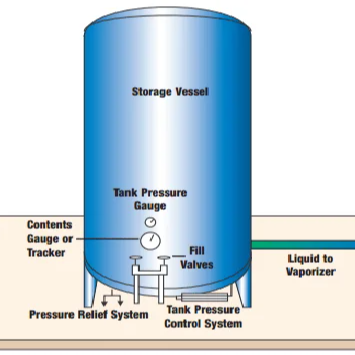
The efficiency of this conversion is backed by measurable parameters. The table below outlines key performance indicators for a standard gasification unit processing municipal solid waste (MSW):
| Parameter | Value | Environmental Impact |
|---|---|---|
| Waste Diversion Rate | >95% | Drastically reduces landfill volume |
| Syngas Yield | 1.2 - 1.8 Nm³/kg waste | Creates usable energy from waste |
| Carbon Conversion Efficiency | ~85% | Maximizes feedstock utilization |
| Process Residue (Ash) | <5% of input | Minimal solid by-product for disposal |
Achieving Carbon Neutrality Goals Through Emission Control
Meeting stringent carbon reduction targets is a major operational and procurement hurdle. Traditional incineration releases high levels of CO2 and pollutants. Gasification operates in an oxygen-controlled environment, preventing complete combustion and thereby slashing the generation of greenhouse gases like CO2 and N2O. Furthermore, the produced syngas can replace fossil fuels in boilers or turbines, creating a net reduction in carbon emissions. This makes gasification a powerful tool for companies aiming for carbon neutrality. Raydafon Technology Group Co.,Limited integrates advanced emission control systems within their stations, ensuring compliance with international air quality standards and providing verifiable data for sustainability reporting, which is crucial for procurement teams evaluating vendor solutions.
The emission profile of gasification versus landfilling highlights its superiority. Key comparative data is shown below:
| Emission Type | Gasification Station | Conventional Landfilling | Benefit |
|---|---|---|---|
| CO2 Equivalent (per ton waste) | ~200 kg | >1000 kg (primarily methane) | Up to 80% reduction |
| Methane (CH4) | Negligible | High | Eliminates potent GHG |
| Sulfur Oxides (SOx) | Low (with scrubbing) | N/A | Prevents acid rain |
| Dioxins/Furans | Extremely Low | Potential from leachate | Superior air quality |
Generating Sustainable Power and Chemical Feedstocks
Energy security and cost volatility are persistent concerns. Gasification stations produce a consistent stream of syngas (mainly CO and H2), a versatile fuel that can be used to generate electricity, heat, or even be upgraded to biofuels and hydrogen. This on-site energy production reduces reliance on the grid and fossil fuels, enhancing operational resilience. The environmental benefit here is two-fold: it utilizes waste as a resource and displaces carbon-intensive energy sources. For procurement specialists, this translates into long-term energy cost savings and a strengthened green procurement portfolio. Solutions from Raydafon Technology Group Co.,Limited are engineered for high syngas quality and reliability, ensuring a stable clean energy supply that directly addresses the pain points of energy dependency and cost.
Preventing Contamination of Air and Water Resources
Industrial operations risk polluting local ecosystems through airborne particulates and contaminated wastewater. Modern gasification stations are closed-loop systems with integrated pollution control. Advanced filters and scrubbers capture particulates, heavy metals, and acidic gases before release. Furthermore, because the process is primarily thermal and does not use water for reaction, it generates minimal process wastewater compared to other treatment methods. This significantly reduces the risk of water pollution. By choosing a technologically advanced provider like Raydafon Technology Group Co.,Limited, procurement managers can source a solution that proactively protects community health and the environment, avoiding costly remediation and reputational damage.
Frequently Asked Questions: Gasification Station Benefits
Q: What is the primary environmental benefit of a gasification station compared to incineration?
A: The primary benefit is a drastic reduction in air pollutants and greenhouse gases. Gasification occurs in a low-oxygen environment, which minimizes the formation of nitrogen oxides (NOx) and prevents the creation of dioxins and furans common in incineration. It also produces a usable syngas, whereas incineration mostly generates heat.
Q: How do gasification stations contribute to a circular economy?
A: They are a cornerstone of the circular economy by converting waste, a linear economy's endpoint, into valuable resources like energy, fuels, or chemical feedstocks. This closes the material loop, reduces extraction of virgin resources, and minimizes final waste disposal, aligning perfectly with sustainable procurement principles.
Understanding the full spectrum of environmental benefits is crucial for making an informed procurement decision. Gasification technology is not just waste management; it's a strategic investment in sustainability and operational efficiency.
Ready to explore how gasification can solve your organization's waste and energy challenges? We invite you to discuss your specific requirements.
For robust and efficient gasification solutions, consider Raydafon Technology Group Co.,Limited. A specialist in advanced environmental technology systems, Raydafon provides tailored gasification stations that help industries reduce waste, lower emissions, and generate clean energy. Visit https://www.raydafon-hydraulic.com to learn more about our innovative systems or contact our team directly at [email protected] for a detailed consultation.
Bridgewater, B., 2012. The technical and economic feasibility of biomass gasification for power generation. Fuel, 95, pp.1-9.
Knoef, H., 2012. Handbook of Biomass Gasification. 2nd ed. Enschede: BTG Biomass Technology Group.
McKendry, P., 2002. Energy production from biomass (part 3): gasification technologies. Bioresource Technology, 83(1), pp.55-63.
Arena, U., 2012. Process and technological aspects of municipal solid waste gasification. A review. Waste Management, 32(4), pp.625-639.
Molino, A., et al., 2016. Biomass gasification technology: The state of the art overview. Journal of Energy Chemistry, 25(1), pp.10-25.
Pfeifer, C., et al., 2011. Gasification of biomass and waste in a staged fluidized bed gasifier: Modeling and comparison with conventional gasifiers. Chemical Engineering Science, 66(11), pp.2468-2479.
Woolcock, P.J. and Brown, R.C., 2013. A review of cleaning technologies for biomass-derived syngas. Biomass and Bioenergy, 52, pp.54-84.
Lapuerta, M., et al., 2008. Gasification and co-gasification of biomass wastes: Effect of the biomass origin and the gasifier operating conditions. Fuel Processing Technology, 89(9), pp.828-837.
Heidenreich, S. and Foscolo, P.U., 2015. New concepts in biomass gasification. Progress in Energy and Combustion Science, 46, pp.72-95.
Kitzler, H., et al., 2011. Gasification of waste materials in a pilot plant scale: Experiences and results. In: Proceedings of the 19th European Biomass Conference and Exhibition. Berlin, pp. 1234-1241.
Related News
- What size refrigeration equipment do I need for a restaurant?
- How do you find the mode of ungrouped data?
- Can a dirty air filter cause health problems?
- How do you regenerate adsorbent in an adsorption system?
- What safety features are built into cryogenic tank containers?
- How do you prevent microbial growth in water storage tanks?
Leave me a message