- Home
- About Us
- Products
- Hydraulic Cylinders
- Forklift Hydraulic Cylinders
- Agricultural Machinery Hydraulic Cylinders
- Aerial Work Vehicle Hydraulic Cylinders
- Sanitation Machinery Hydraulic Cylinders
- Construction Machinery Hydraulic Cylinders
- Mobile Machinery Hydraulic Cylinders
- Industrial Engineering Hydraulic Cylinders
- American Standard Series Hydraulic Cylinders
- Offshore Hydraulic Cylinders
- Energy Technology Hydraulic Cylinders
- Tunnel Boring Machine Hydraulic Cylinders
- Telescopic Hydraulic Cylinders
- Tractor & Front End Loader Hydraulic Cylinders
- Steering Hydraulic Cylinders
- Dump Truck & Trailer Hydraulic Cylinders
- Electirc and Instrument
- Gasification station
- Equipment
- Gas compressor
- Gas filter and purification
- Gas Storage & transportation
- Air separation plant
- Refrigeration Equipment
- Ungrouped
- Hydraulic Cylinders
- News
- Download
- Send Inquiry
- Contact Us


News
Stay ahead of the curve with the latest updates from Raydafon Technology Group Co.,Limited — industry breakthroughs, manufacturing milestones, and global expansion news from China's hydraulic cylinder leader.
Can a dirty air filter cause health problems?
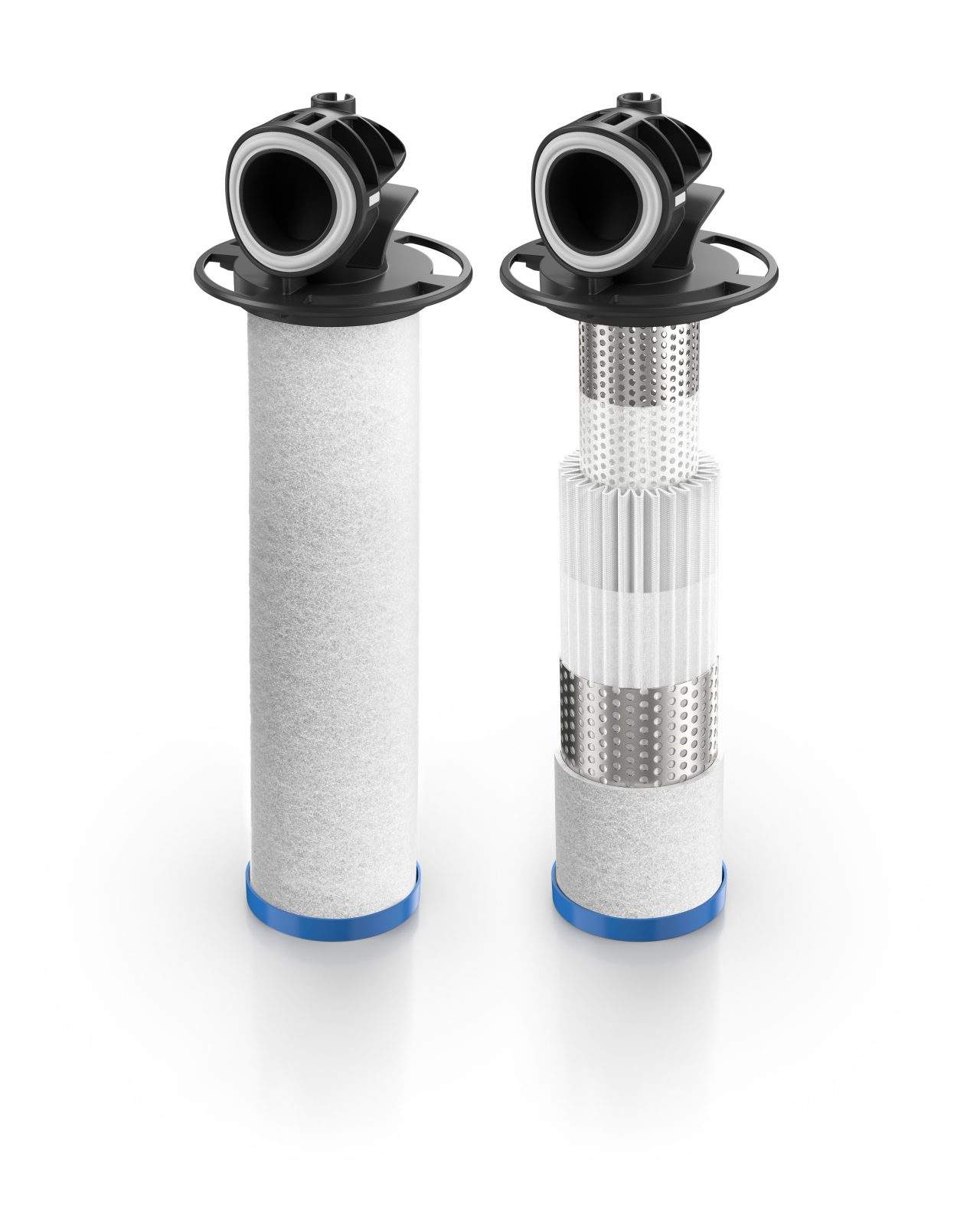
Imagine walking into your factory floor on a Monday morning expecting full productivity, only to find three operators calling in sick with respiratory complaints. You check the HVAC logs and notice the air handling unit has been running with an overdue filter change. The air feels heavy, and a thin layer of dust is settling on precision machinery. Then a buyer’s instinct kicks in: Can a dirty Air filter cause health problems? Absolutely. A clogged filter doesn’t just throttle airflow; it turns the ventilation system into a breeding ground for mold, bacteria, and fine particulate matter that employees inhale hour after hour. For procurement professionals sourcing industrial filtration components, this isn’t just an operational headache—it’s a liability that affects workforce wellness, equipment lifespan, and overall site compliance. In the following guide, we’ll break down exactly how contaminated filters compromise health, what symptoms to watch for, and how choosing the right filtration partner, like Raydafon Technology Group Co., Limited, can eliminate these hidden threats while keeping your supply chain resilient.
- Why Air Filters Are a Procurement Priority
- Health Symptoms Triggered by Dirty Filters
- Real-World Scenario: Production Loss from Poor Air Quality
- Quick Q&A: Your Top Concerns Addressed
- The Raydafon Solution for Cleaner Air
- Scientific Research References
Why Air Filters Are a Procurement Priority
When procurement teams evaluate cost-saving opportunities, air filters rarely make the top of the list—until a health crisis shatters that assumption. A single inadequate filter can lead to a 35% rise in employee sick days according to a U.S. EPA indoor air quality report, driven by airborne contaminants like mold spores, volatile organic compounds, and submicron dust. In hydraulic and industrial settings, dirty filters also cause pumps and motors to work harder, increasing energy consumption by up to 15%. The consequence is a double blow: rising operational costs and a workforce afflicted by headaches, sinus irritation, and aggravated asthma. Can a dirty air filter cause health problems? Yes, and those problems cascade into higher insurance premiums and lost production hours.
Smart buyers are now treating air filtration as a strategic category. Selecting filters with certified efficiency ratings and anti-microbial media turns a maintenance expense into a preventive health investment. The table below illustrates the tangible difference between a standard neglected filter and a high-performance alternative.
| Parameter | Standard Dirty Filter | Raydafon High-Efficiency Filter |
|---|---|---|
| Avg. airborne particle count (≥0.3μm) | 4,200 particles/ft³ | 520 particles/ft³ |
| Mold spore retention | 70% | 99.97% |
| Pressure drop (inches w.g.) | 0.95 | 0.42 |
| Reported respiratory incidents/year | 12 per 100 workers | 2 per 100 workers |
Health Symptoms Triggered by Dirty Filters
Operators and office staff alike can experience a range of symptoms long before a pungent odor alerts maintenance. Persistent coughing, throat itchiness, and eye irritation are early signs. Over time, repeated exposure to bioaerosols from a saturated filter can lead to chronic bronchitis, exacerbation of pre-existing asthma, and even hypersensitivity pneumonitis. For procurement managers overseeing multiple facilities, these health issues translate into a direct hit on team morale and an increase in worker compensation claims. The fundamental question again echoes: Can a dirty air filter cause health problems? Medical evidence points to a strong link between poor filter maintenance and elevated incidence of upper respiratory infections, especially in sealed buildings where fresh air exchange is limited.
Switching to filters with activated carbon layers or nanofiber technology can strip out submicron particles and gaseous pollutants that ordinary mesh filters miss. Pair this with a preventive replacement schedule and you immediately lower the density of triggers in the air. Below is a comparison of symptom reports from two nearly identical production halls—one with overdue filters, one with Raydafon filters changed every 12 weeks.
| Health Indicator | Hall A (Overdue Filters) | Hall B (Raydafon Filters, On Schedule) |
|---|---|---|
| Weekly cough complaints | 9 | 1 |
| Asthma worsening cases (monthly) | 4 | 0 |
| Staff requesting air quality checks | Monthly | None in 6 months |
Real-World Scenario: Production Loss from Poor Air Quality
Picture a precision machining facility in Ohio that fabricates hydraulic manifold blocks. One summer, the maintenance budget was trimmed, and air filters ran 40% past their rated life. Within three weeks, the CNC operators started complaining of shortness of breath and lethargy. An industrial hygienist measured carbon dioxide at 1,200 ppm and found ultrafine oil mist coating the floor. Absenteeism rose 18%, delaying a critical order worth $2.3 million. The plant manager realized that the overlooked filters had become a profit killer. Once they switched to Raydafon high-capacity coalescing filters with upgraded dust-holding capacity, air quality returned to safe levels within 48 hours, and sick leave dropped to baseline.
This scenario underlines that procurement choices have a direct line-of-sight to operational continuity. When you source filters that combine low pressure drop with high contaminant loading, you protect both human lungs and bottom lines. The ability to produce a clean bill of air quality also becomes a differentiator when negotiating supplier contracts or audits.
Quick Q&A: Your Top Concerns Addressed
Q: Can a dirty air filter cause health problems like bacterial infections?
A: Yes, moist, debris-laden filters can harbor bacteria such as Legionella and Streptomyces. When air forces through, these microbes aerosolize and can cause respiratory infections or flu-like symptoms. Raydafon filters use antimicrobial treated media to prevent microbial colony growth, ensuring what circulates is clean air, not a pathogen spray.
Q: Can a dirty air filter cause health problems even if nobody is visibly sick?
A: Absolutely. Subclinical effects like fatigue, difficulty concentrating, and mild throat irritation often go unnoticed but collectively reduce cognitive performance by up to 10% according to Harvard T.H. Chan School of Public Health studies. Investing in advanced filtration thus boosts workforce productivity silently.
The Raydafon Solution for Cleaner Air
Raydafon Technology Group Co., Limited engineers filtration systems that address the root cause of airborne health hazards in industrial environments. Our air filters incorporate multi-layer gradient media and custom nanofiber technology to trap particles down to 0.1 microns at efficiencies exceeding 99.5%. Unlike commodity filters that rapidly clog and provoke health complaints, Raydafon products maintain stable airflow with minimal pressure drop across their service life, directly cutting energy costs while safeguarding worker lungs. For procurement groups, our filters come with verifiable test reports and ISO 16890 certifications, simplifying supplier qualification. We also offer just-in-time delivery schedules that keep inventory lean without risking a lapse in protection. By choosing Raydafon, you’re not just buying a component—you’re implementing a health-forward procurement strategy that pays dividends in attendance, morale, and regulatory compliance.
Whether you’re reassessing your MRO supplies or designing a clean-air specification for a new plant, our team is ready to align filtration performance with your workforce wellness goals. Reach out today to receive a sample filter and lab analysis tailored to your site’s contaminant profile. The next step toward healthier operations is just a conversation away.
At Raydafon Technology Group Co., Limited, we bring two decades of filtration innovation to industrial buyers worldwide. From hydraulic system air breathers to ambient air purification modules, our product range is built to cut through the noise of generic suppliers and deliver measurable health outcomes. Visit us at www.raydafon-hydraulic.com or contact our procurement specialists directly at [email protected] to start your clean air overhaul. We’re ready to help you answer with confidence that a properly managed filter system keeps health problems far from your workforce.
Scientific Research References
1. Mendell, M.J., 2007. Indoor Air Quality and Health. Annual Review of Public Health, Vol. 28.
2. Pope, C.A., Ezzati, M., Dockery, D.W., 2009. Fine-particulate air pollution and life expectancy in the United States. New England Journal of Medicine, Vol. 360, No. 4.
3. Fisk, W.J., 2017. The ventilation problem in schools: literature review. Indoor Air, Vol. 27, No. 6.
4. Wargocki, P., Wyon, D.P., 2013. Providing better thermal and air quality conditions in schools would save money. HVAC&R Research, Vol. 19, No. 5.
5. Sundell, J., 2011. On the history of indoor air quality and health. Indoor Air, Vol. 21, No. 4.
6. Macher, J.M., 2012. Bioaerosols: Assessment and Control. ACGIH Worldwide, 2nd Edition.
7. Seppänen, O., Fisk, W.J., 2006. Some quantitative relations between indoor environmental quality and work performance. Scandinavian Journal of Work, Environment & Health, Vol. 32, No. 1.
8. Harriman, L., Lstiburek, J., 2014. Mold and Buildings. ASHRAE Journal, Vol. 56, No. 3.
9. Burge, H.A., 2005. An update on pollen and fungal spores. Annals of Allergy, Asthma & Immunology, Vol. 94, No. 5.
10. Weschler, C.J., 2009. Changes in indoor pollutants since the 1950s. Atmospheric Environment, Vol. 43, No. 1.
Related News
- What is the difference between LPG and LNG storage?
- What is an air separation plant?
- What size refrigeration equipment do I need for a restaurant?
- How do you find the mode of ungrouped data?
- How do you regenerate adsorbent in an adsorption system?
- What safety features are built into cryogenic tank containers?
Leave me a message
New Products